Bread
Come on, Snow, Come Down from Sky.
I was headed into the grocery store to pick up snacks for Oscar night.
He was standing in front of the double doors, a silhouette against the flourescent lights of the store's interior.
He was wire thin, in his 30s, maybe, and wearing dark jeans, a winter jacket and black ski cap, skin darker than blue, his words thick with an island accent.
He was standing, hands at his sides, palms open and up toward the stars, his neck bent far back to turn his face to the sky.
His voice boomed, a deep baritone plea.
I looked up at the sky in spite of myself, like how could it not respond to such richness of a person.
Nothing happened. I smiled at him. He nodded in my direction. I went around him into the store. He went back to soliciting store customers for a ride in his gypsy cab. As I walked by, he mumbled to himself about feeling tired, and wanting to be able to go home.
I don't know the particulars of his situation, of why the onset of snow would allow him to go home. It would be hours before the roads got bad enough to warrant not driving. Maybe if it snowed he could justify to himself retiring early for the evening, missing out on whatever fares he might have left tonight if he loiters in front of the store until the 11 o'clock close.
Before I lived in New York, I lived an insulated life. I lived in a house, which I left every morning and got in my car, and drove to my job, where I worked in my office until I got back in my car and drove back to my house. I lived in a world of walls, barriers between me and the rest of the people in my town moving around in their own barriers. I know this now because here, in New York, I live among people. Being an avid pedestrian, I walk among people, rub shoulders with them (literally) on my way to work, whisper light brushes against their bodies walking down the street, hear snips of a thousand conversations every day. There's a different kind of intimacy, privacy here in the city, a privacy that incorporates a hundred bodies, a hundred voices in every space. I am struck daily by the beauty of people simply going about their business. It takes all kinds of people to make a city work; councilmen, dog walkers, fry cooks, teenagers, cab drivers, sanitation workers, doctors, window dressers, food cart vendors, nannies, real estate moguls, bank tellers, and on and on. A city's elite can only live by sharing the street with the blue collar workers who tend them. That's true of any cities, population 2 million or 2 thousand.
My mom recently sent me one of those forwarded emails that make the rounds, this one labeled an angry "HOW TO DESTROY AMERICA" just like that, in all caps. The long and short of this email was that our country is dying because of an influx of immigrants and a government that indulges them by adopting a policy of multiculturalism, valuing diversity over patriotism and tolerance over adaptation. According to the article, we are losing our national identity, and the loss is killing us. These points all made in much more offensive rhetoric than how I've summarized them here. I asked mom what she thought my reaction to the email would be. Rightly, she said she knew it would make me angry, and it did. I find such oversimplified, alarmist attitudes symptomatic of a kind of educated biggotry. The kind that points fingers at our immigrant populations and blames them for rising unemployment levels, health care costs and poor economies.
Here in the city, I interact with these people every day, all day. They are my clients at work. They serve me pretzels on the sidewalks and drive me where I need to go when I run late. They cook the food and mop the floors behind the swinging kitchen doors of my restaurants. They carry the boxes that contain the clothes hanging on the shelves of my clothing stores. They've also probably picked the fruit I eat when I buy it in the store, refinished the floor in my apartment when it was last renovated, stitched the knockoff designer bag the lady next to me on the train is carrying, sold me bootleg dvds, delivered my food when the weather has been too lousy for me to go out, and scores of other behind the scenes tasks I probably don't even know about.
Some of them work 14 hour days, live in 2 bedroom apartments with up to 8 people, send 60 percent of their income home to families abroad, or save their entire pay to bring more family members here. They do it without health insurance, paid holidays, sick days, life insurance, tax returns or vacations.
None of them are working jobs that I find myself sitting at home wishing I had, but most of them, like me, just want the opportunity to work and make a living.
As for the man I saw this evening who stood outside the grocery store pleading with the sky, when I came out of the store 20 minutes later, he was gone, and it was snowing.
I love how sometimes the magic of just wishing for something really hard works.
I love the sight of people in moments of true humanity, unguarded.
Humanity is what we all have, and it doesn't matter what state of affairs our "papers" are in.
The real destruction of America is in the forgetting of that very thing. ¶ 8:26 PM 1 comments

Sunday, February 25, 2007
That's what he said.I was headed into the grocery store to pick up snacks for Oscar night.
He was standing in front of the double doors, a silhouette against the flourescent lights of the store's interior.
He was wire thin, in his 30s, maybe, and wearing dark jeans, a winter jacket and black ski cap, skin darker than blue, his words thick with an island accent.
He was standing, hands at his sides, palms open and up toward the stars, his neck bent far back to turn his face to the sky.
His voice boomed, a deep baritone plea.
I looked up at the sky in spite of myself, like how could it not respond to such richness of a person.
Nothing happened. I smiled at him. He nodded in my direction. I went around him into the store. He went back to soliciting store customers for a ride in his gypsy cab. As I walked by, he mumbled to himself about feeling tired, and wanting to be able to go home.
I don't know the particulars of his situation, of why the onset of snow would allow him to go home. It would be hours before the roads got bad enough to warrant not driving. Maybe if it snowed he could justify to himself retiring early for the evening, missing out on whatever fares he might have left tonight if he loiters in front of the store until the 11 o'clock close.
Before I lived in New York, I lived an insulated life. I lived in a house, which I left every morning and got in my car, and drove to my job, where I worked in my office until I got back in my car and drove back to my house. I lived in a world of walls, barriers between me and the rest of the people in my town moving around in their own barriers. I know this now because here, in New York, I live among people. Being an avid pedestrian, I walk among people, rub shoulders with them (literally) on my way to work, whisper light brushes against their bodies walking down the street, hear snips of a thousand conversations every day. There's a different kind of intimacy, privacy here in the city, a privacy that incorporates a hundred bodies, a hundred voices in every space. I am struck daily by the beauty of people simply going about their business. It takes all kinds of people to make a city work; councilmen, dog walkers, fry cooks, teenagers, cab drivers, sanitation workers, doctors, window dressers, food cart vendors, nannies, real estate moguls, bank tellers, and on and on. A city's elite can only live by sharing the street with the blue collar workers who tend them. That's true of any cities, population 2 million or 2 thousand.
My mom recently sent me one of those forwarded emails that make the rounds, this one labeled an angry "HOW TO DESTROY AMERICA" just like that, in all caps. The long and short of this email was that our country is dying because of an influx of immigrants and a government that indulges them by adopting a policy of multiculturalism, valuing diversity over patriotism and tolerance over adaptation. According to the article, we are losing our national identity, and the loss is killing us. These points all made in much more offensive rhetoric than how I've summarized them here. I asked mom what she thought my reaction to the email would be. Rightly, she said she knew it would make me angry, and it did. I find such oversimplified, alarmist attitudes symptomatic of a kind of educated biggotry. The kind that points fingers at our immigrant populations and blames them for rising unemployment levels, health care costs and poor economies.
Here in the city, I interact with these people every day, all day. They are my clients at work. They serve me pretzels on the sidewalks and drive me where I need to go when I run late. They cook the food and mop the floors behind the swinging kitchen doors of my restaurants. They carry the boxes that contain the clothes hanging on the shelves of my clothing stores. They've also probably picked the fruit I eat when I buy it in the store, refinished the floor in my apartment when it was last renovated, stitched the knockoff designer bag the lady next to me on the train is carrying, sold me bootleg dvds, delivered my food when the weather has been too lousy for me to go out, and scores of other behind the scenes tasks I probably don't even know about.
Some of them work 14 hour days, live in 2 bedroom apartments with up to 8 people, send 60 percent of their income home to families abroad, or save their entire pay to bring more family members here. They do it without health insurance, paid holidays, sick days, life insurance, tax returns or vacations.
None of them are working jobs that I find myself sitting at home wishing I had, but most of them, like me, just want the opportunity to work and make a living.
As for the man I saw this evening who stood outside the grocery store pleading with the sky, when I came out of the store 20 minutes later, he was gone, and it was snowing.
I love how sometimes the magic of just wishing for something really hard works.
I love the sight of people in moments of true humanity, unguarded.
Humanity is what we all have, and it doesn't matter what state of affairs our "papers" are in.
The real destruction of America is in the forgetting of that very thing. ¶ 8:26 PM 1 comments
Artgasm
Friday night I spend my time in the American and Modern sections.
And that's where Jackson Pollock happened to me.

I've always loved art. I've loved making it, I've loved looking at it. I got my first real art supplies when I was about seven, a professional pen and ink set, and several college level books detailing techniques for line ink drawing. I devoured them.
In college, I took several art classes, and in my senior year an art history class, Women Artists Since 1940. It was my first official "survey" art course, and I chose it with trepidation but at the encouragement of my academic advisor, who felt it would work doubletime to satisfy both my English and Women's Studies requirements for my major. The class was taught by a sour, unpleasant woman named Thalia Gouma Peterson, who believed noone was as smart as her and who, despite being an avowed feminist, actually hated women. In the first week of class, she informed us that we would be keeping a semester long journal in which we were to choose six paintings from the coursework a week and journal about them. Never having taken an art history class before, I wasn't really sure what "journal about them" meant, and I raised my hand and asked for clarification. Did she want us to talk about how we felt looking at them? About the composition...color, tone, texture, mechanics? About what critics said? Was there a form for this type of writing, or was this to be a more organic process? She looked at me with contempt and informed me that journaling meant journaling. That first week, I fretted about what to do. I knew what I liked, how my tastes ran, and we had been introduced to several works that I had strong reactions to, but I had no idea what was expected of me in terms of how to talk about art. I ended up writing about my reactions to the paintings, their tone and how they made me feel.
That was apparently not what she had in mind. The following week when she handed the journals back, I opened mine to find a big red "F", and a scrawled note reading I can't believe you're a senior English major!
So began an ugly semester between the two of us. My efforts to better understand her expectations of me only fueled her belief that I was just trying to "get over" in the class, which only fueled my anger at her anti-feminist approach to teaching and to women in general. I ended up failing the class. I appealed the F and won, and she ended up begrudginly passing me with a "C".
Since then, I've always been a little bit intimidated by the "art world." Again, I know my taste, and I'm confident in my ability to do things like decorate my home, or create household art, but I've shied away from talking about art with people who are artists or art critics. I'm able to enjoy looking at art, I love going to the Met, but I've never had that really intimate, personal and gut punching reaction to a piece. I've never just been floored, in any kind of emotional way. Usually it's more about appreciating the work of a specific artist in the context of their life condition or struggle.
This weekend I saw my first Jackson Pollock painting in person. I've seen poster reproductions of his work, and I've seen reproductions in art books and documentaries. But never the real deal. And I've never felt particularly drawn to abstract art.
Imagine my suprise, then, when I turned a corner in the modern gallery and came face to face with Jackson Pollock's Autumn Rhythm (Number 30) and couldn't walk away.
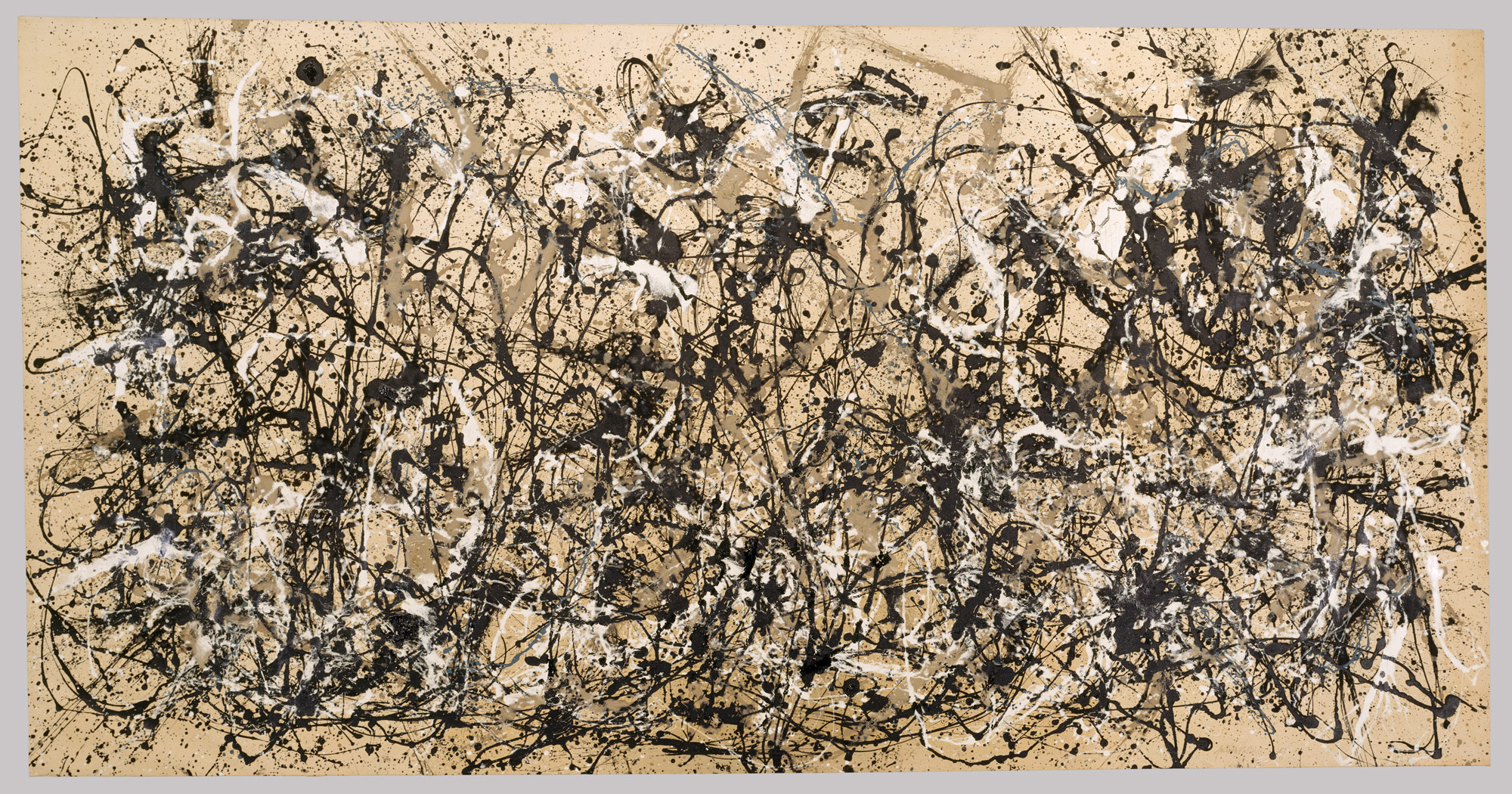
It was bigger than me, and it had a depth that I felt like I literally sank into. It had a kind of energy that was mesmerizing, and I found myself staring and staring, trying to find a methodology, trying to find a starting point among the layers and layers of paint drips. I've looked at his drip works before and flippantly thought to myself that they didn't seem particularly "planned," that they were random and chaotic and easily reproduced. I was completely wrong. The longer I stood there and stared, the more entreched I got, and patterns started to emerge, and my eyes were travelling and travelling the canvas without stopping. It was alive. I sat down in front of it and just stared, and felt this warmth come over me, this joy. No kidding. It was like suddenly I just "got it." I got what people talked about when they talked about art that was transformative, that was emotional and intimate. I had my first artgasm, right there in the Met in front of 20 other people speeding through the galleries with no idea what I was seeing. I was awestruck. I used to be one of them.
I sat there for 45 minutes. I started to feel this protectiveness of the painting. I felt myself inwardly flinching as people walked by and commented that it was nothing, that they could do the same thing on their garage wall. I wasn't really interested in seeing anything else that night; I was afraid to walk away from it, afraid when I came back to see it again I wouldn't see it like I was seeing it in that moment, that it's power would be lost.
After a little while, the gallery security attendant walked over to me. He apologized for interrupting me, told me he wasn't supposed to talk to patrons but he couldn't help but see my reaction to the painting. He had a thick Jamaican accent and I had to strain to hear him, but I was curious as to what he wanted. I nodded that it was okay, and he proceeded to tell me a story of a man he saw one day who came in and sat on the very bench I was sitting on, staring at the painting. He told me the man sat for six hours, six hours, and at the end of the day he stood up, he shook his head, shrugged and walked away. The guard told me he didn't know what it was that man had been looking for, but that he didn't think he found it. He told me I had that same look in my eye, and told me the painting was very intriguing to many people.
I still sat, looking. I do think the man found what he was looking for.
I certainly did. Without even realizing that I had been searching. Hello existentialism, I didn't know I had you in me.
When I got home, I researched a bit about Jackson Pollock. I found out that he believed that art was more than representations of familiar forms. He thought people used lines to create boundaries, to define shapes and space and enclosures, and he sought to free lines from definition and expose them as independently beautiful. When he painted, he stretched great pieces of canvas across the floor of his studio. He said "On the floor I am more at ease. I feel nearer, more part of the painting, since this way I can walk around it, work from the four sides and literally be in the painting." He didn't work with a brush, he used his hands, he used sticks and sometimes poured paint right out of the can to drip and spatter paint against the canvas in layers on layers. This was known as his "drip" period, between 1946 and 1950. Eventually, as his work gained more notariety he began feeling pressure from gallery owners to return to a more structured, traditional "form" representation in his paintings. He stopped doing drip works, and began drinking. In 1953 he stopped painting all together, unable to resolve his creative inspirations with the work he created to please the public and gallery owners. He died in 1956 in an alcohol related car crash, at the age of 44. People call his style of painting "action painting," and say he gave birth to the movement.
I was fortunate enough to find a video of him in action on youtube. It doesn't come near representing the actual wonderment of seeing his work in person. Neither does the reproduction I included above do it justice. If you really want to know, you'll just have to come to New York and visit the Met for yourself. I'll even put you up.
In the meantime, I've acquired a list of the locations of all 26 of his drip pieces. You can guess how I'll be spending my spring.
¶ 8:20 PM 0 comments
Sunday, February 11, 2007
I went to the Met this weekend (that's the Metropolitan Museum of Art, for those Non New Yorkers among us). I love going, and now that I'm older I've taken to restricting myself when I go, vowing to spend my time not trying to rush through a whirlwind overview of the entire collection, but to devote my time to one wing, to spend three, sometimes four hours just absorbing a small portion, taking time to read the cards and stories behind the work, to see the tiniest brushstrokes over a glancing appreciation.Friday night I spend my time in the American and Modern sections.
And that's where Jackson Pollock happened to me.
I've always loved art. I've loved making it, I've loved looking at it. I got my first real art supplies when I was about seven, a professional pen and ink set, and several college level books detailing techniques for line ink drawing. I devoured them.
In college, I took several art classes, and in my senior year an art history class, Women Artists Since 1940. It was my first official "survey" art course, and I chose it with trepidation but at the encouragement of my academic advisor, who felt it would work doubletime to satisfy both my English and Women's Studies requirements for my major. The class was taught by a sour, unpleasant woman named Thalia Gouma Peterson, who believed noone was as smart as her and who, despite being an avowed feminist, actually hated women. In the first week of class, she informed us that we would be keeping a semester long journal in which we were to choose six paintings from the coursework a week and journal about them. Never having taken an art history class before, I wasn't really sure what "journal about them" meant, and I raised my hand and asked for clarification. Did she want us to talk about how we felt looking at them? About the composition...color, tone, texture, mechanics? About what critics said? Was there a form for this type of writing, or was this to be a more organic process? She looked at me with contempt and informed me that journaling meant journaling. That first week, I fretted about what to do. I knew what I liked, how my tastes ran, and we had been introduced to several works that I had strong reactions to, but I had no idea what was expected of me in terms of how to talk about art. I ended up writing about my reactions to the paintings, their tone and how they made me feel.
That was apparently not what she had in mind. The following week when she handed the journals back, I opened mine to find a big red "F", and a scrawled note reading I can't believe you're a senior English major!
So began an ugly semester between the two of us. My efforts to better understand her expectations of me only fueled her belief that I was just trying to "get over" in the class, which only fueled my anger at her anti-feminist approach to teaching and to women in general. I ended up failing the class. I appealed the F and won, and she ended up begrudginly passing me with a "C".
Since then, I've always been a little bit intimidated by the "art world." Again, I know my taste, and I'm confident in my ability to do things like decorate my home, or create household art, but I've shied away from talking about art with people who are artists or art critics. I'm able to enjoy looking at art, I love going to the Met, but I've never had that really intimate, personal and gut punching reaction to a piece. I've never just been floored, in any kind of emotional way. Usually it's more about appreciating the work of a specific artist in the context of their life condition or struggle.
This weekend I saw my first Jackson Pollock painting in person. I've seen poster reproductions of his work, and I've seen reproductions in art books and documentaries. But never the real deal. And I've never felt particularly drawn to abstract art.
Imagine my suprise, then, when I turned a corner in the modern gallery and came face to face with Jackson Pollock's Autumn Rhythm (Number 30) and couldn't walk away.
It was bigger than me, and it had a depth that I felt like I literally sank into. It had a kind of energy that was mesmerizing, and I found myself staring and staring, trying to find a methodology, trying to find a starting point among the layers and layers of paint drips. I've looked at his drip works before and flippantly thought to myself that they didn't seem particularly "planned," that they were random and chaotic and easily reproduced. I was completely wrong. The longer I stood there and stared, the more entreched I got, and patterns started to emerge, and my eyes were travelling and travelling the canvas without stopping. It was alive. I sat down in front of it and just stared, and felt this warmth come over me, this joy. No kidding. It was like suddenly I just "got it." I got what people talked about when they talked about art that was transformative, that was emotional and intimate. I had my first artgasm, right there in the Met in front of 20 other people speeding through the galleries with no idea what I was seeing. I was awestruck. I used to be one of them.
I sat there for 45 minutes. I started to feel this protectiveness of the painting. I felt myself inwardly flinching as people walked by and commented that it was nothing, that they could do the same thing on their garage wall. I wasn't really interested in seeing anything else that night; I was afraid to walk away from it, afraid when I came back to see it again I wouldn't see it like I was seeing it in that moment, that it's power would be lost.
After a little while, the gallery security attendant walked over to me. He apologized for interrupting me, told me he wasn't supposed to talk to patrons but he couldn't help but see my reaction to the painting. He had a thick Jamaican accent and I had to strain to hear him, but I was curious as to what he wanted. I nodded that it was okay, and he proceeded to tell me a story of a man he saw one day who came in and sat on the very bench I was sitting on, staring at the painting. He told me the man sat for six hours, six hours, and at the end of the day he stood up, he shook his head, shrugged and walked away. The guard told me he didn't know what it was that man had been looking for, but that he didn't think he found it. He told me I had that same look in my eye, and told me the painting was very intriguing to many people.
I still sat, looking. I do think the man found what he was looking for.
I certainly did. Without even realizing that I had been searching. Hello existentialism, I didn't know I had you in me.
When I got home, I researched a bit about Jackson Pollock. I found out that he believed that art was more than representations of familiar forms. He thought people used lines to create boundaries, to define shapes and space and enclosures, and he sought to free lines from definition and expose them as independently beautiful. When he painted, he stretched great pieces of canvas across the floor of his studio. He said "On the floor I am more at ease. I feel nearer, more part of the painting, since this way I can walk around it, work from the four sides and literally be in the painting." He didn't work with a brush, he used his hands, he used sticks and sometimes poured paint right out of the can to drip and spatter paint against the canvas in layers on layers. This was known as his "drip" period, between 1946 and 1950. Eventually, as his work gained more notariety he began feeling pressure from gallery owners to return to a more structured, traditional "form" representation in his paintings. He stopped doing drip works, and began drinking. In 1953 he stopped painting all together, unable to resolve his creative inspirations with the work he created to please the public and gallery owners. He died in 1956 in an alcohol related car crash, at the age of 44. People call his style of painting "action painting," and say he gave birth to the movement.
I was fortunate enough to find a video of him in action on youtube. It doesn't come near representing the actual wonderment of seeing his work in person. Neither does the reproduction I included above do it justice. If you really want to know, you'll just have to come to New York and visit the Met for yourself. I'll even put you up.
In the meantime, I've acquired a list of the locations of all 26 of his drip pieces. You can guess how I'll be spending my spring.
¶ 8:20 PM 0 comments
Icicles
Icicles, especially in unlikely places.
Q train, Prospect Park station, Brooklyn, NY.
Monday morning commute.
February 5, 2007
 ¶ 11:40 PM 1 comments
Monday, February 05, 2007
Things I love...Icicles, especially in unlikely places.
Q train, Prospect Park station, Brooklyn, NY.
Monday morning commute.
February 5, 2007
 ¶ 11:40 PM 1 comments
Great Music Monday: Linda Ronstadt
It's been awhile, but I thought it was time for some great music, you know, on Monday, because Monday's suck. And great music is...well...great!
Today, a little Linda Ronstadt.
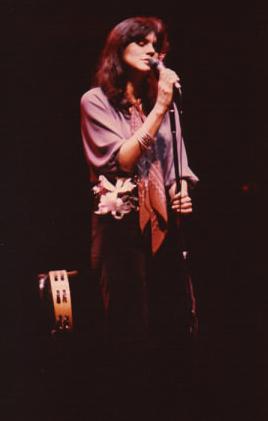
I've been a Linda fan for a long time; I love her in the 70s with her rootsy, country-folk rock, I love her in the 80s and 90s with the Nelson Riddle Orchestra doing jazz standards, I love her these days teaming up with Dolly Parton and Emmylou Harris doing covers and converting rock songs to children's lullabies.
Linda hit the music scene in 1967 as the lead singer of a band called the Stone Poneys, with a song called Different Drum, written by Mike Nesmith of the Monkees. Different Drum was not her most commercially successful song, but her clear-as-a-bell voice did get her the attention of several songwriters, beginning her looong career as a talented vocal artist and champion of then lesser known songwriters including Elvis Costello, Phillip Glass, Randy Newman, James Taylor, Roy Orbison, Kate & Anna McGarrigle, Paul Anka, Hank Williams, Patti Griffin, The Everly Brothers, Jackson Browne, Don Henley, Neil Young, Tom Petty and Aaron Neville.
She's incredibly feminine, but also incredibly and tomboyishly tough, and brings a different kind of femininity to her music than other female artists of the time including Diana Ross, Melanie, Carole King and Carly Simon. She was faded blue jeans over flower skirts, electric guitar over whispering folk, and managed to break into the boys club of rock and roll but maintain her identity as a woman at the same time. She was also the first woman to successfully sell out stadium concerts with only herself as the headliner. In 1975 she was photographed by
Annie Leibowitz for an interview and picture spread in Rolling Stone magazine, launching her to super sex-symbol status, but never lost her girl next door appeal.
That's what I like best about her. On top of her importance as a woman in the rock music scene in the 70s, she just makes really good music, and onstage she has a realness about her that draws you in and feels incredibly homey to listen to. Like she might well be playing the night away in a backyard jam session rather than playing to audiences of a thousand or more. And she is a person who simploy loves music. Of all genres. She's collaborated with more artists than I can list here, and has had hits on the pop, country, rock, latin, easy listening, blues, opera, mariachi and children's charts. The big hits, most of us know... It's So Easy, That'll Be the Day, Heat Wave, When Will I Be Loved, You're No Good, Blue Bayou. Below, a few of my favorites, of the lesser known but just as good variety. And a few that are insanely popular but simply too good not to include.
These are all live performances... she's actually never released a live album throughout her career, which is unfortunate as she seems to be a performer who really feeds off of and gets that much better with the energy of the crowd.
Most of these clips are from her 1976 concert Linda Rondstadt London, which is posted on youtube in it's entirety by the fabulous JKTRL. If you've got the time, I encourage you to watch all 12 of the clips. It won't be time wasted.
And now, some favorites. You'll have to follow the links for some of these, as the user denies embedding access. Just click on the song name for the jump.

The Tattler

Willin'
Desperado
Okay, so here are two versions of this song, because it's my favorite of hers and I simply couldn't decide which I liked better. The first is from a 1974 performance on American Bandstand; it sounds much like the studio released version that got radio airplay, and you can really hear how good the song is. Plus I love the backup singer in the yellow jumpsuit behind her who is shaking hip like she doesn't even have bones.
The second version is from an outdoor summer concert she did in 1976 and she is ROCKING OUT. She's really feeding on the energy of the crowd, and the music is loud and hard, and she's putting all her guts into it and the result is awesome, even if the audio quality isn't as good.
Hope you enjoy them both. I just couldn't choose only one.
You're No Good - American Bandstand
You're No Good - Summer of 76 ¶ 11:00 PM 0 comments
Today, a little Linda Ronstadt.
I've been a Linda fan for a long time; I love her in the 70s with her rootsy, country-folk rock, I love her in the 80s and 90s with the Nelson Riddle Orchestra doing jazz standards, I love her these days teaming up with Dolly Parton and Emmylou Harris doing covers and converting rock songs to children's lullabies.
Linda hit the music scene in 1967 as the lead singer of a band called the Stone Poneys, with a song called Different Drum, written by Mike Nesmith of the Monkees. Different Drum was not her most commercially successful song, but her clear-as-a-bell voice did get her the attention of several songwriters, beginning her looong career as a talented vocal artist and champion of then lesser known songwriters including Elvis Costello, Phillip Glass, Randy Newman, James Taylor, Roy Orbison, Kate & Anna McGarrigle, Paul Anka, Hank Williams, Patti Griffin, The Everly Brothers, Jackson Browne, Don Henley, Neil Young, Tom Petty and Aaron Neville.
She's incredibly feminine, but also incredibly and tomboyishly tough, and brings a different kind of femininity to her music than other female artists of the time including Diana Ross, Melanie, Carole King and Carly Simon. She was faded blue jeans over flower skirts, electric guitar over whispering folk, and managed to break into the boys club of rock and roll but maintain her identity as a woman at the same time. She was also the first woman to successfully sell out stadium concerts with only herself as the headliner. In 1975 she was photographed by
Annie Leibowitz for an interview and picture spread in Rolling Stone magazine, launching her to super sex-symbol status, but never lost her girl next door appeal.
That's what I like best about her. On top of her importance as a woman in the rock music scene in the 70s, she just makes really good music, and onstage she has a realness about her that draws you in and feels incredibly homey to listen to. Like she might well be playing the night away in a backyard jam session rather than playing to audiences of a thousand or more. And she is a person who simploy loves music. Of all genres. She's collaborated with more artists than I can list here, and has had hits on the pop, country, rock, latin, easy listening, blues, opera, mariachi and children's charts. The big hits, most of us know... It's So Easy, That'll Be the Day, Heat Wave, When Will I Be Loved, You're No Good, Blue Bayou. Below, a few of my favorites, of the lesser known but just as good variety. And a few that are insanely popular but simply too good not to include.
These are all live performances... she's actually never released a live album throughout her career, which is unfortunate as she seems to be a performer who really feeds off of and gets that much better with the energy of the crowd.
Most of these clips are from her 1976 concert Linda Rondstadt London, which is posted on youtube in it's entirety by the fabulous JKTRL. If you've got the time, I encourage you to watch all 12 of the clips. It won't be time wasted.
And now, some favorites. You'll have to follow the links for some of these, as the user denies embedding access. Just click on the song name for the jump.
The Tattler
Willin'
Desperado
Okay, so here are two versions of this song, because it's my favorite of hers and I simply couldn't decide which I liked better. The first is from a 1974 performance on American Bandstand; it sounds much like the studio released version that got radio airplay, and you can really hear how good the song is. Plus I love the backup singer in the yellow jumpsuit behind her who is shaking hip like she doesn't even have bones.
The second version is from an outdoor summer concert she did in 1976 and she is ROCKING OUT. She's really feeding on the energy of the crowd, and the music is loud and hard, and she's putting all her guts into it and the result is awesome, even if the audio quality isn't as good.
Hope you enjoy them both. I just couldn't choose only one.
You're No Good - American Bandstand
You're No Good - Summer of 76 ¶ 11:00 PM 0 comments
